Lydion Energy is the independent practice of Mert Karaçelebi, a power systems engineer and researcher at TU Delft. It builds software for grid analysis, runs RMS and EMT stability studies, and advises teams putting AI to work in energy systems.
Streamlines of a potential flow with circulation around the Lydion disc, integrated live with RK4.
8 yearsin power systems, across academia and industrial R&D
Hitachi Energy, Siemensstrategic grid studies in Zurich, energy management systems in Ankara
3 journal articlesplus a book chapter and a CIGRE paper on AI for grid dynamics and security
IEEE PES TR-140chapter lead, data-driven methods for secure low-inertia grids
01/Services
Three ways to work with Lydion.
Software, studies and advice for the people who plan, operate and build electricity grids: system operators, developers, equipment makers, and the research teams working with them.
01 Build
Power system software
Custom tools for engineers who have outgrown spreadsheets and hand-run simulations.
Simulation and analysis tooling in Python and Julia
Automated study workflows around DIgSILENT PowerFactory and open-source solvers
Machine learning models packaged as tools that operators and planners can actually use
Data pipelines from simulations and measurements to decisions
02 Study
Dynamic studies and analysis
Clear answers on how a grid behaves when something goes wrong, and what to do about it.
RMS and EMT stability studies
Dynamic model building, tuning and validation
Frequency, voltage and oscillation stability with high shares of wind, solar and storage
Contingency screening, cascading-failure and blackout risk analysis
Strategic grid studies: e-mobility on distribution grids, DER management, offshore wind connection
03 Advise
Consultancy, advisory and project management
Senior technical judgement, from a two-day review to a multi-year programme.
Software consultancy: architecture, code and model review, tool selection
AI in energy: feasibility studies, technical due diligence, roadmaps
Scientific advisory for companies, grid operators and research consortia, including proposals
Project management for R&D that spans academia and industry
Training on machine learning for electrical engineers
Every engagement is run by Mert directly. You keep the code, the models and the reports.
02/Expertise
Two fields, one question.
How does a modern grid behave in the seconds after a disturbance, and how do you know in time?
A
AI in energy systems
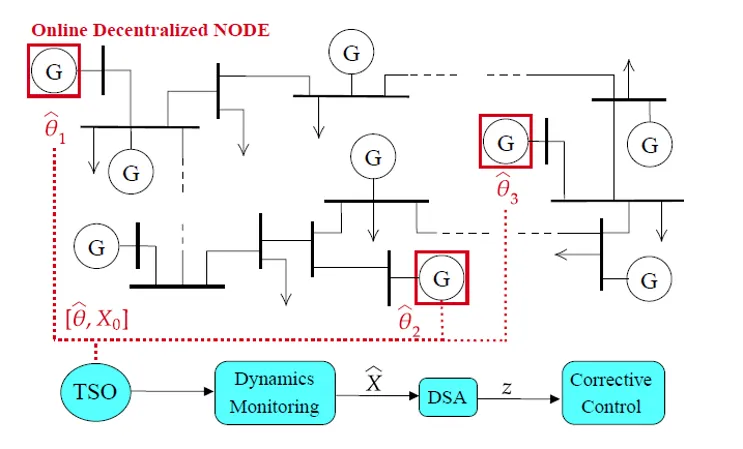
Machine learning that respects the physics. Mert’s research uses neural ordinary differential equations to learn a grid’s dynamics from measurements while an event unfolds, fast enough for an operator to act on the forecast.
Neural ODEs and scientific machine learning
Online dynamics forecasting from local measurements
ML surrogates and digital twins for dynamic security assessment
Reinforcement learning for N-k contingency ranking
Grids with less inertia and more power electronics fail in new ways. Getting the model right, and picking the right kind of study, is most of the work.
RMS and EMT studies
Frequency, rotor-angle, voltage and small-signal stability
Inverter-based resources and their controls
Low-inertia systems and frequency control
Optimal power flow, distribution grids, multi-energy planning
Tools DIgSILENT PowerFactory, PSS Sincal, MATLAB and Simulink, MATPOWER, PowerSimulationsDynamics.jl
Field noteRMS or EMT? Most projects need both: RMS to find where the risk is, EMT to see what actually happens there.
Aspect
RMS (phasor)
EMT (electromagnetic transient)
What is solved
Fundamental-frequency phasors
Instantaneous three-phase waveforms
Time step
Milliseconds
Microseconds
Typical horizon
Seconds to minutes
Milliseconds to seconds
Scope
Whole systems, thousands of buses
A plant, a corridor, a converter and its neighbours
Questions it answers
Frequency nadir, rotor-angle and voltage stability, damping of slow oscillations
Converter control interactions, weak-grid behaviour, fault ride-through detail, sub-synchronous and harmonic effects
03/Research
The methods are peer reviewed.
Lydion’s approach comes out of Mert’s research in the Intelligent Electrical Power Grids group at TU Delft, published in the main power systems journals.
2025International Journal of Electrical Power & Energy Systems
Instead of one model of the whole grid, several small neural ODEs learn from local measurements at large generators after a fault and forecast what happens next. Operators get a trajectory to act on, not just a stable or unstable flag.
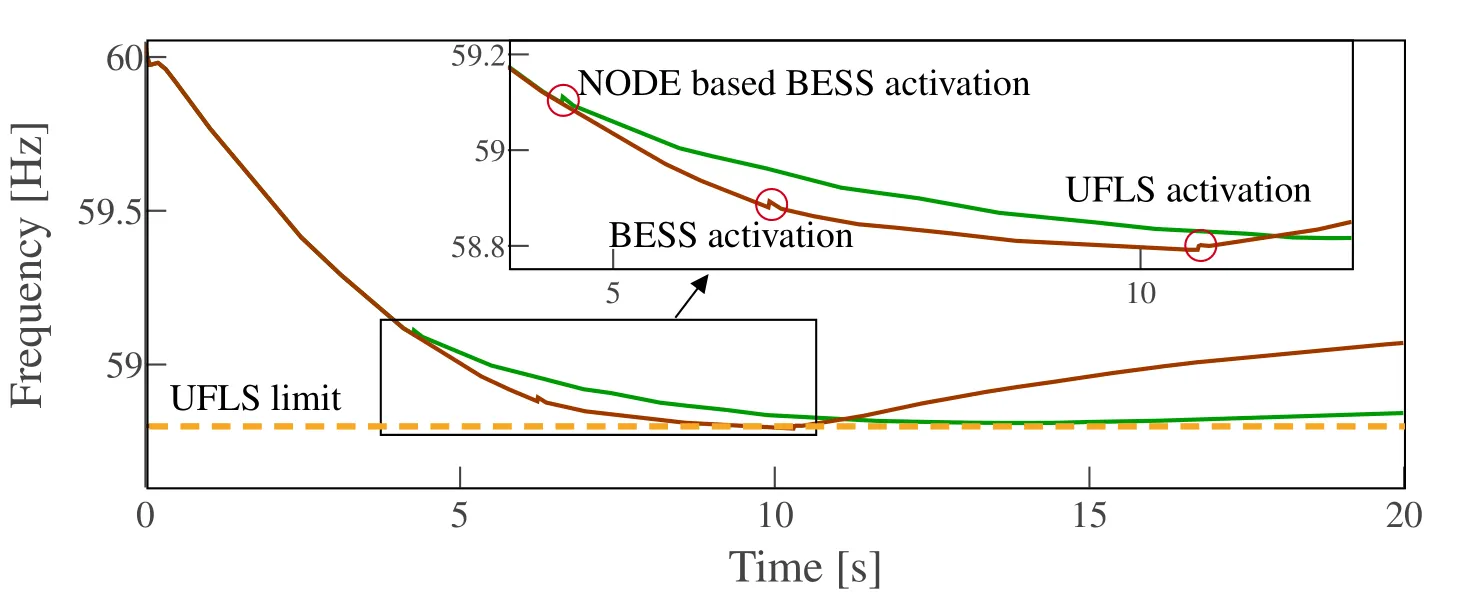
A neural ODE trained on the disturbance while it happens, in near real time, predicts the frequency nadir. On the IEEE 39-bus system the forecast comes early enough to trigger a battery and avoid under-frequency load shedding.
A review from the IEEE working group on Big Data & Analytics for Transmission Systems: how low-inertia grids lose stability, which monitoring technology exists, and where data-driven methods help.
Founder of Lydion Energy. PhD candidate at TU Delft.
I like problems where the physics and the data have to agree, and where the answer is needed in seconds rather than days.
I am a PhD researcher at TU Delft, where I work on AI and optimisation for power system dynamics and security. I developed neural ODE methods that forecast how a grid behaves after a fault and support emergency frequency control, and reinforcement learning that ranks N-k contingencies for security assessment.
Before Delft I studied at ETH Zurich and METU, ran strategic grid studies at Hitachi Energy in Zurich, and helped deploy energy management systems for Turkish distribution operators with Siemens. I started Lydion Energy to bring what works in research into the tools and decisions of the people who plan and run grids.
Working languages: English and Turkish. Some German and Dutch.
Path
2021 to nowPhD researcher, TU DelftIntelligent Electrical Power Grids group and Delft AI Energy Lab. AI and optimisation for power system dynamics and security.
2019 to 2021Power System of the Future, Hitachi EnergyZurich, formerly ABB Power Grids. Strategic studies and internal consulting on e-mobility, grid resilience, DER management, hydrogen and offshore wind.
2018 to 2021MSc Electrical Engineering and Information Technology, ETH Zurich
2017 to 2018Electrical engineer, SiemensAnkara, part-time. Energy management system deployments on Siemens Spectrum for Turkish distribution system operators.
2013 to 2018BSc Electrical and Electronics Engineering, METUMiddle East Technical University, Ankara.
Also
Chapter lead, IEEE PES Technical Report TR-140, coordinating authors from universities, TSOs and research institutes in Europe and the Americas
Panel speaker, IEEE SGSMA 2026 in Santiago de Chile
Organising committee, DynPOWER 2024 workshop on dynamic stability of future grids, Delft
Co-developed the MSc course EE4C12 Machine Learning for Electrical Engineering and served as a head teaching assistant
Supervised MSc theses on probabilistic risk estimation and AI-based emergency frequency control
Short bio, for organisers and press
Mert Karaçelebi is the founder of Lydion Energy, a Rotterdam-based practice for power system software, dynamic studies and AI in energy systems. He is a PhD researcher at TU Delft working on AI and optimisation for power system dynamics and security, and has worked with Hitachi Energy and Siemens. He holds an MSc from ETH Zurich and led a chapter of IEEE PES Technical Report TR-140 on data-driven methods for secure low-inertia grids.
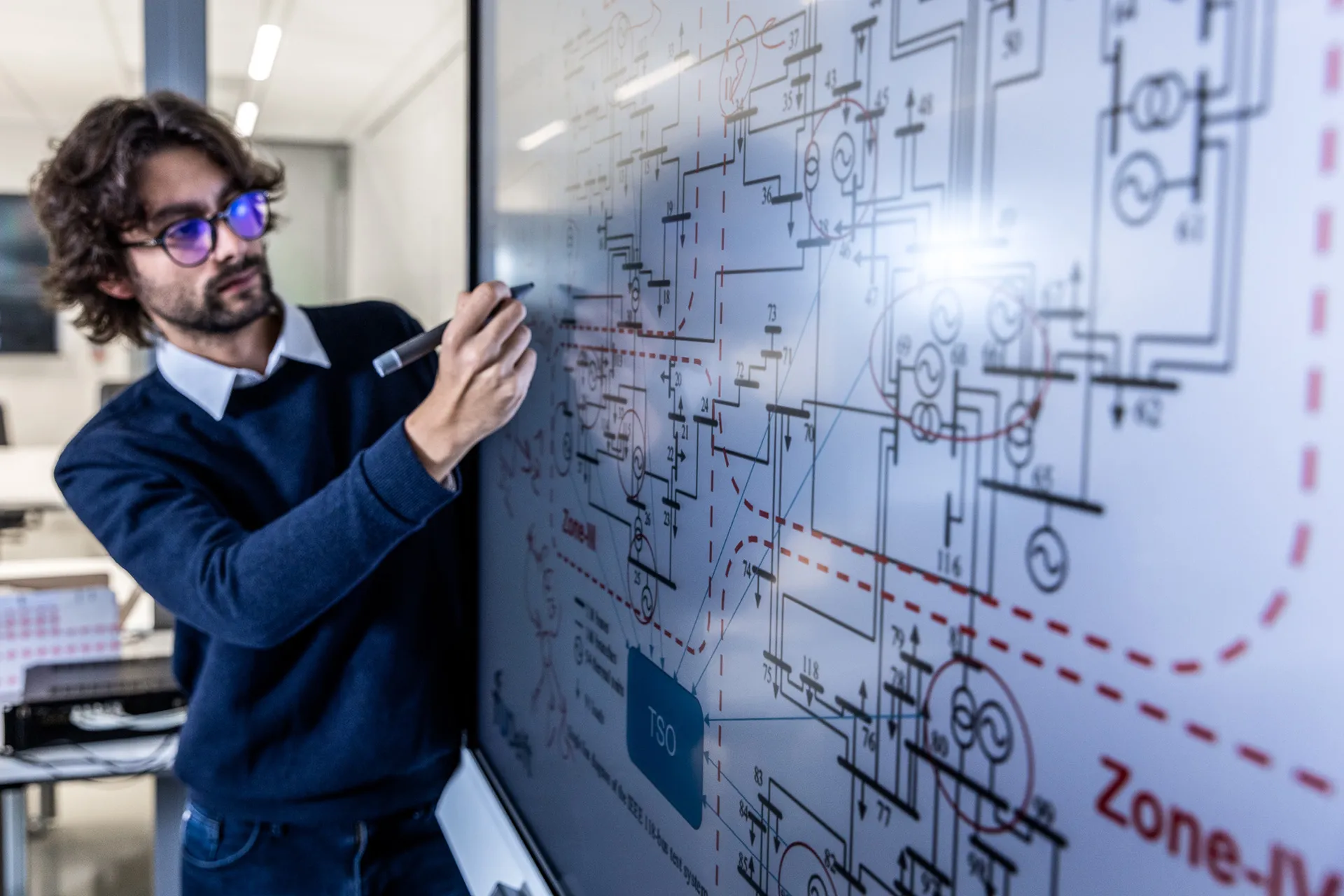
Working through a single-line diagram. Photo: Marieke de Lorijn.
05/Contact
Work with Lydion.
Send a short note on the grid, the model or the question, your timeline, and what you need delivered.